


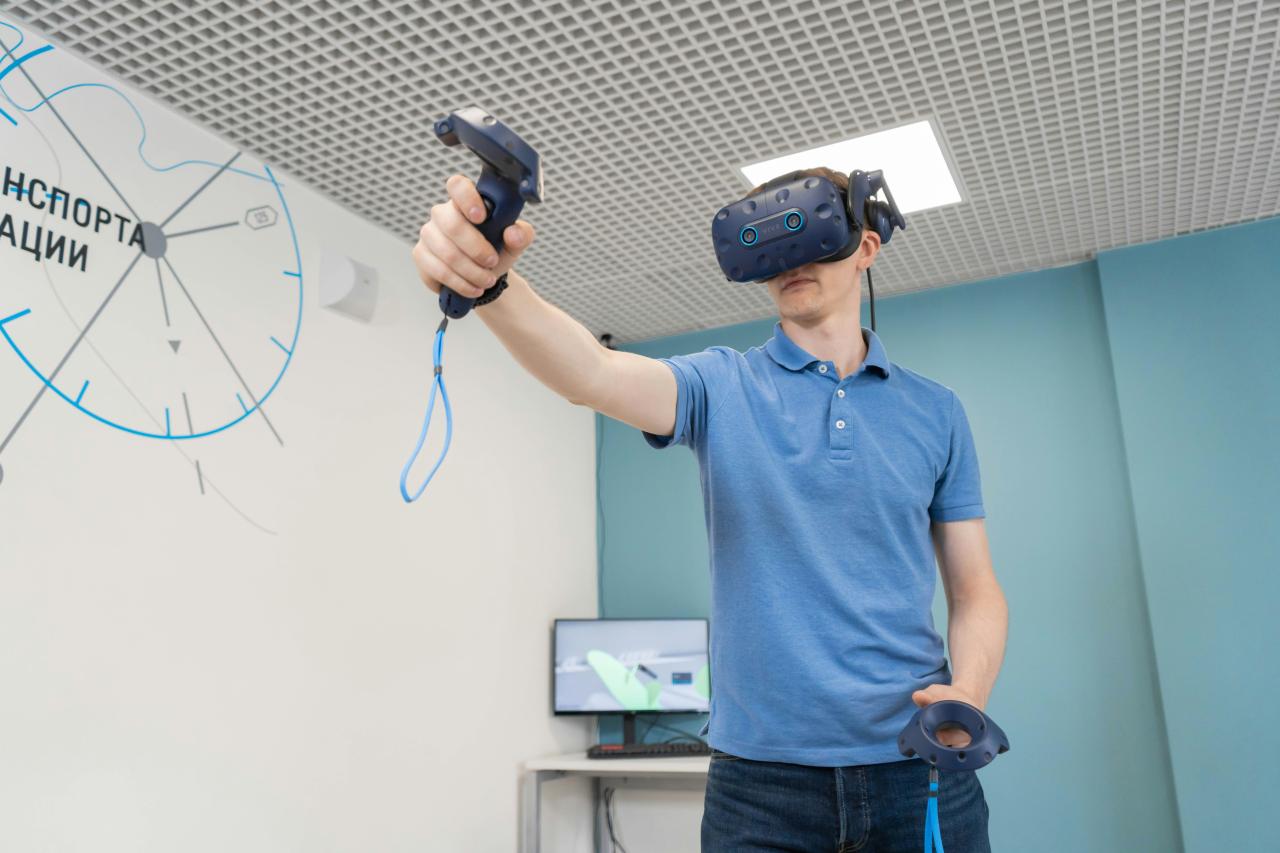
The world of athletic competition is standing on the brink of a massive technological revolution that promises to blur the lines between physical activity and digital entertainment. For decades, sports fans have been limited to watching their favorite athletes from a distance or playing sedentary video games that lack true physical engagement.
However, the rapid advancement of Virtual Reality technology is finally delivering an immersive experience that puts you directly inside the arena with breathtaking realism. We are moving away from the era of simple headsets and entering a time where haptic feedback, motion tracking, and spatial audio create a complete sensory environment.
This shift represents more than just a new way to play games; it is the birth of a entirely new category of physical fitness and competitive mastery. Athletes can now train in hyper-realistic simulations that replicate the exact conditions of a stadium without the risk of physical injury or the need for expensive travel.
As the hardware becomes more accessible and lightweight, we expect a surge in global participation that will redefine the definition of a professional sport.
This comprehensive guide explores the technical innovations and the cultural shifts that are driving the future of Virtual Reality sports. Let us dive into the mechanics and the human potential of this digital frontier to help you understand the next level of global competition.
Technical Innovations Driving Immersive Athletic Performance

A. Advanced Haptic Feedback Systems
The ability to feel the impact of a ball or the tension of a racket is essential for creating a believable sports simulation in a virtual world. Modern haptic suits and gloves use hundreds of tiny actuators to provide precise physical sensations across your entire body during a match.
These systems allow you to feel the wind resistance as you sprint or the physical force of an opponent’s move in a combat sports simulation. Without this sensory data, the brain struggles to treat the virtual environment as a real physical space for high-level competition.
Many users find traditional VR lacking because it feels like floating in space, but haptic tech solves this by anchoring your senses to physical touch.
B. High Precision Full Body Motion Tracking
To compete at a professional level, the virtual world must mirror your physical movements with zero latency and millimeter-level accuracy. We are seeing a transition from simple handheld controllers to sophisticated camera-based systems and wearable sensors that track every joint and muscle.
This data allows for complex maneuvers like subtle footwork in tennis or intricate hand positioning in basketball that were previously impossible to replicate. High-fidelity tracking ensures that your digital avatar reacts exactly like your physical body, making skill the only deciding factor in a match.
If you struggle with “clunky” movement in older VR titles, the move to sub-millimeter tracking solves that disconnected feeling instantly.
C. Spatial Audio and Environmental Realism
Sound plays a critical role in athletic awareness, allowing you to track the positions of teammates and rivals without looking directly at them. The future of VR sports relies on spatial audio engines that simulate how sound waves bounce off different stadium materials and crowds.
You will hear the distant roar of the fans in the upper decks and the specific “thud” of a ball hitting the turf behind your left shoulder. This level of acoustic detail creates a psychological state of “presence” where your mind fully accepts the virtual arena as your current reality.
Accurate sound propagation solves the problem of “flat” environments and gives you the vital auditory cues needed for split-second reactions.
D. Wireless Mobility and Cloud Rendering
The days of being tethered to a powerful PC by heavy cables are quickly ending as wireless headsets and cloud streaming become the new industry standards. Athletes need total freedom of movement to perform sprints, jumps, and full-body rotations without the fear of tripping or damaging their equipment.
Cloud rendering allows for incredibly high-quality visuals to be streamed directly to a lightweight headset, removing the need for bulky onboard processors.
This mobility turns any open space into a world-class arena, from your living room to a local park or a dedicated VR gym. Eliminating the cable solves the most significant physical barrier to entry for high-intensity virtual reality sports.
The Rise Of Professional VR Leagues
A. Global Accessibility and Democratized Competition
Virtual Reality removes the geographic and financial barriers that often prevent talented athletes from reaching the professional level in traditional sports. You no longer need access to a private tennis court or a specialized racing track to develop world-class skills and compete against the best.
A kid in a small town can practice in the same virtual stadium as a billionaire, ensuring that raw talent remains the most important asset. This democratization is leading to a massive influx of new competitors from diverse backgrounds who are redefining the competitive meta.
The digital arena solves the problem of “exclusive access” and creates a truly global meritocracy for the next generation of athletes.
B. Spectator Engagement and Virtual Stadiums
The way we watch sports is changing as VR allows fans to sit “courtside” or even watch from the perspective of their favorite player during a match. Virtual stadiums can hold millions of fans simultaneously without the logistical headaches of physical travel, security, or limited seating capacity.
Fans can interact with each other in real-time, share stats, and even experience the physical tension of the match through their own haptic devices at home.
This level of immersion creates a much deeper emotional connection between the fans and the professional athletes they admire. VR solve the “distant spectator” problem by making every fan an active participant in the energy of the live event.
C. New Categories of Hybrid Physical Digital Sports
We are seeing the birth of sports that could never exist in the physical world, involving gravity-defying maneuvers and impossible architectural layouts. These hybrid sports combine the physical exertion of traditional athletics with the creative freedom of digital game design to produce a unique competitive experience.
Athletes must master new physical laws and adapt their muscle memory to handle environments that shift and change during the heat of battle. This innovation keeps the competitive scene fresh and exciting for both the participants and the viewers who crave new challenges.
Exploring these non-traditional sports solves the “stagnation” problem found in centuries-old athletic disciplines that rarely see significant rule changes.
D. Standardization of Competitive Integrity
As VR sports move toward mainstream acceptance, the industry is developing strict standards for anti-cheat software and hardware calibration. Every headset and sensor must provide the same level of performance to ensure a fair playing field for all professional competitors.
Regulatory bodies are also addressing the “ping” advantage by using decentralized servers that provide equal latency to players regardless of their physical location. These standards ensure that victory is decided by skill, strategy, and physical fitness rather than who has the most expensive internet connection.
Rigorous technical standards solve the “fairness” concerns that often hold back digital games from being recognized as true professional sports.
Physical Fitness And Health Implications
A. Gamified Workouts and Cardio Endurance
Virtual Reality sports provide a powerful solution to the boredom of traditional gym routines by turning intense cardio into an exciting competitive game. You can burn hundreds of calories in a single session of virtual boxing or rhythm-based athletics without even realizing you are working out.
The competitive element triggers an adrenaline response that allows you to push past your normal physical limits and achieve higher levels of fitness.
Many people quit their fitness goals because they lack motivation, but VR solves this by making the “work” part of the routine feel like play. Gamification turns the struggle of exercise into a rewarding journey of skill progression and digital achievement.
B. Injury Rehabilitation and Safe Training
Athletes can use VR to maintain their skills and mental focus while recovering from physical injuries that would normally keep them off the field. You can practice your swing or your defensive positioning in a low-impact virtual environment that doesn’t put stress on your healing joints or muscles.
Coaches also use these simulations to teach new strategies and plays without the risk of “real world” collisions or accidental falls during practice.
This safe training environment extends the careers of professional athletes and reduces the overall rate of serious sports-related injuries. VR training solves the “down-time” problem by keeping athletes mentally sharp and physically active during their recovery periods.
C. Mental Health and Cognitive Development
VR sports require incredible levels of focus, spatial awareness, and strategic thinking that can improve your overall brain health and cognitive function. The intense concentration needed to track digital objects at high speeds helps sharpen your reaction times and your ability to process complex information under pressure.
Many users also report that the immersive nature of VR sports provides a powerful “flow state” that reduces stress and improves their daily mood.
The digital arena offers a healthy outlet for competitive energy and a sense of community that benefits the mental well-being of its participants. Immersive play solves the problem of “mental fatigue” by providing a complete escape into a world of achievement and physical movement.
D. Data Driven Performance Tracking
Every movement you make in a VR sport is recorded as a digital data point, allowing for an incredibly detailed analysis of your physical performance. You can review your “heat maps” to see where you tend to miss shots or analyze your heart rate and movement speed to find the perfect training intensity.
This level of feedback is usually only available to elite professional athletes with million-dollar coaching staffs, but VR makes it available to everyone.
You can track your progress over months and see exactly how your reaction times and accuracy have improved through consistent practice. Detailed data analysis solves the “plateau” problem by highlighting exactly where you need to improve to reach the next level.
Conclusion

Virtual Reality sports represent the most significant evolution in human competition for centuries. The technology has finally reached a point where digital play feels like true physical movement. We are entering an era where your location no longer defines your athletic potential.
The global community is growing as more people discover the joy of immersive competition. You should embrace these tools to improve your health and your competitive skills. The future of sports is bright and filled with endless digital and physical possibilities.
Don’t let the fear of new technology keep you away from the digital arena. The skills you develop in VR will translate into real-world confidence and fitness. We are proud to witness the birth of this exciting new athletic culture.
Thank you for exploring the future of Virtual Reality sports with us. May your headset be light and your movements be fast in every match. The digital stadium is waiting for you to step inside and claim your victory.
Enjoy the freedom of movement and the thrill of the virtual game. Your journey toward becoming a next-gen athlete begins with the very next session.

